As far as I’m concerned, it’s important for writers to become acquainted with other aspects of their craft, and to explore areas that are not immediately perceived to be “relevant”.
Read MoreA printing press at the British Library

Technology
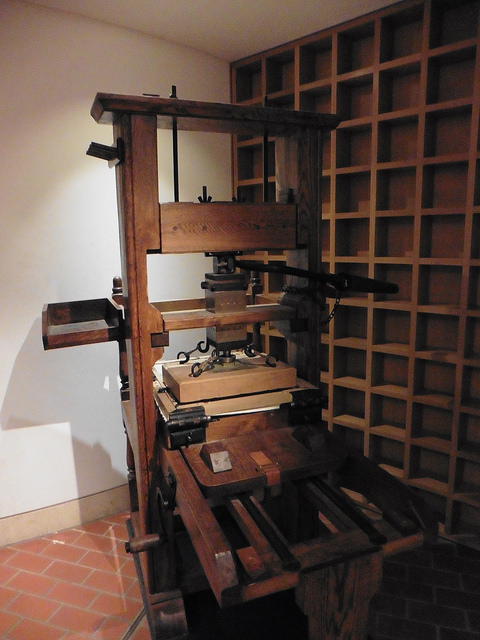
A printing press at the British Library
As far as I’m concerned, it’s important for writers to become acquainted with other aspects of their craft, and to explore areas that are not immediately perceived to be “relevant”.
Read More
Girl in black leather jacket. Photo from Pexels. Licence: CC0
How can you remember all those ideas you have or snippets of conversation you hear while out and about? These ten note-taking approaches should help.
Read More
Screenshot of the British Library website, by Terry Freedman
It’s all very well being able to write, but what about how we write, that is the tools we use? There is a fascinating exhibition coming in London in April 2019 that explores this.
Read More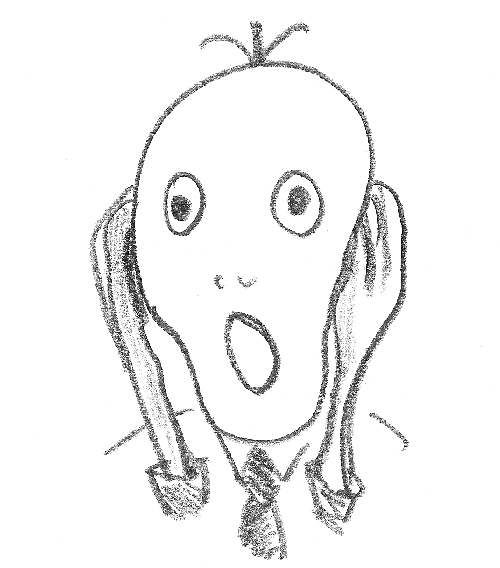
With apologies to Edvard Munch
What could be worse than losing all of your carefully crafted work? Here are 5 ways to protect yourself against that happening.
Read MoreBooklinker is a brilliant url shortener for your Amazon books and Amazon author page.
Read MoreI love my Kindle, and there are 7 features of it that I find exceedingly useful. Here they are.
Read More
Can writers benefit from using technology that is old, and without much functionality?
Read More
But will he dictate even more of what you see?
How will Virtual Reality reportage affect our experience of the news? What are the ethical issues involved?
Read MoreRead all about it: my experiment is setting up a separate news feed.
Read MoreAn obvious sort of tip that may be beneficial nevertheless.
Read More
The format makes a difference Photo from www.pexels.com
Whether you read books on an ebook reader or read the paper versions instead makes a more profound difference than you might imagine.
Read More Most writers use a computer of some sort these days, and the thing about computers is that they go wrong. It’s not an ‘if’, but a ‘when’. In my experience, it happens when you have a deadline for the same day or when you were just about to dash out of the door to start your holiday. Unless you’re working for a company or some sort of co-operative, chances are you are your own technician. So what can you do to minimise the pain?
 Many of my articles on this blog are reflections on writing and technology. Although there are some writers who eschew the idea of technology, I believe that if you define “technology” widely enough, it becomes obvious that all writers use technology.
Even those who are fortunate enough to have an assistant to whom they can dictate their thoughts, and who will then type them up, are using technology – albeit at one remove
 I am not sure if displaying one’s word count is a good idea or not. On the one hand, you are publicly committing yourself to writing, because if your word count remain static then it appears to everyone that you are not doing anything. On the other hand, appearing not to be doing any writing could be quite embarrassing.
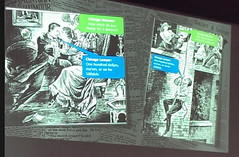 Victorian humour? A contradiction in terms, surely? Not according to Bob Nicholson, a lecturer in history who is on a mission to make Victorian jokes funny again (which presupposes they were funny in the first place, of course, but one assumes they were!).
Now, you may think this has nothing to do with writing, but it has. Bob is using a computing technique known as “text mining” to trawl through loads of Victorian publications held by the British Library, and extract jokes.
Back in April 2014 I penned a few lines on using Word as a desktop publishing tool. On the whole it works, but, as I noted then, it does have serious limitations.
I mentioned in that article that it was impossible to use automated cross-referencing between text boxes. Since then I have discovered something even worse.
A short while ago I published an article called 5 reasons for using Scrivener for writing books.
I wondered: could Scrivener be used to write blog articles?